By: Dr. Tyler A. Gerdin, PsyD
Picture two candidates for a director role. One fills the room: he’s quick with a story, confident in every answer, and easy to imagine on stage at the company kickoff. The other asks more questions than she answers, credits her team by name, and admits what she’s still figuring out.
Many organizations promote the first one. The data suggest they often shouldn’t.
Best to be careful, though. Humility has its limitations, and some of the most modest-sounding leaders aren’t humble at all. Before we can make the business case for the real thing, we need to know what it isn’t.

The Two Counterfeits of Humility
The first counterfeit is shrinking. It looks like modesty. The person deflects every compliment, downplays every contribution, and hesitates to step up when leadership is needed. The leader who says “Oh, it was nothing, the team did everything” may still quietly want the recognition, just without having to ask for it. That leaves the team confused and this leader resentful. This sounds more like insecurity than humility.
The second counterfeit is performing. This is humility as image management: the carefully worded “I’m just so grateful” post, or the self-deprecating joke that’s really fishing for reassurance. It knows what humility sounds like, sometimes amounting to virtue signaling.
Neither counterfeit helps a team. Both leave people unsure where they stand and what the leader actually wants.

What True Humility Is
Organizational research gives us a clearer picture. Owens, Johnson, and Mitchell (2013) describe humble leadership as three observable behaviors: seeing oneself accurately, appreciating others’ strengths and contributions, and modeling teachability (openness to feedback and new ideas).
Notice what’s missing from that list: thinking poorly of yourself. The key word is accurately. A humble leader doesn’t inflate their contribution, and doesn’t erase it either.
The philosopher Thomas Aquinas made the same point more than seven centuries ago. He taught that humility works alongside another virtue called magnanimity, meaning “greatness of soul.” Humility keeps us from grabbing for more than we deserve. Magnanimity pushes us to pursue the great things we’re actually capable of. We need both. Without humility, confidence turns into arrogance. Without magnanimity, humility turns into playing small (ST II-II, qq. 129 and 161).
The word virtue comes from the Latin virtus, meaning strength. Humility was never meant to be a polite kind of weakness. It’s the strength to see yourself clearly, flaws and gifts alike.
Humility Is Good for Business
For teams and employees. A 2022 meta-analysis pooling dozens of studies found that humble leadership was positively related to trust in the leader, commitment, job satisfaction, engagement, creativity, task performance, and employees’ willingness to speak up. Several of these relationships were strong, well above the size typically seen in workplace research. The same analysis found that humble leadership explained outcomes beyond what transformational, servant, and ethical leadership already accounted for. In other words, humility isn’t just good leadership under a new name. It adds something of its own.
A 2024 meta-analysis reached a similar conclusion, linking humble leadership to better task performance and effort. Employees went above and beyond for these leaders. Part of this mechanism appears to be trust: employees trust humble leaders more and build stronger relationships with them, and that relationship carries through to performance.
At the top of the organization. Humility matters in the C-suite too. In a study of 105 small-to-mid-sized U.S. software and hardware firms, more humble CEOs led executive teams that collaborated more, shared information, made decisions together, and held a common vision. Those firms also had smaller pay gaps between the CEO and the rest of the top team. The humble CEO and top team, in turn, were better able to balance exploring new opportunities with executing on existing ones, an ability associated with stronger firm performance (Ou, Waldman, & Peterson, 2018).
On Wall Street, with a twist. A study of S&P 500 CEOs found that firms led by more humble CEOs had better market performance. The researchers were candid about the reason, though: it wasn’t because those firms performed better operationally. Analysts set lower earnings expectations for them, which made those expectations easier to meet or beat. Humble leaders, it seems, tend not to overpromise.
A Modern Example: Alan Mulally at Ford
When Alan Mulally arrived at Ford in 2006, the company was facing a $17 billion loss, declining quality, and shrinking market share. Eight years later, Ford had avoided bankruptcy without a government bailout and become one of the most profitable automakers in the world.
His method was not what most people expect from a turnaround CEO. At Ford, he built a system of color-coded business plan reviews and pressed his leaders to mark a project “red” whenever they needed help. For weeks, every chart came back green, even as the company was losing billions. When one executive, Mark Fields, finally showed red, Mulally applauded. People who were at Ford at the time recall that the story spread through the company as a cultural turning point. Leaders began to believe they could tell the truth and ask for help.
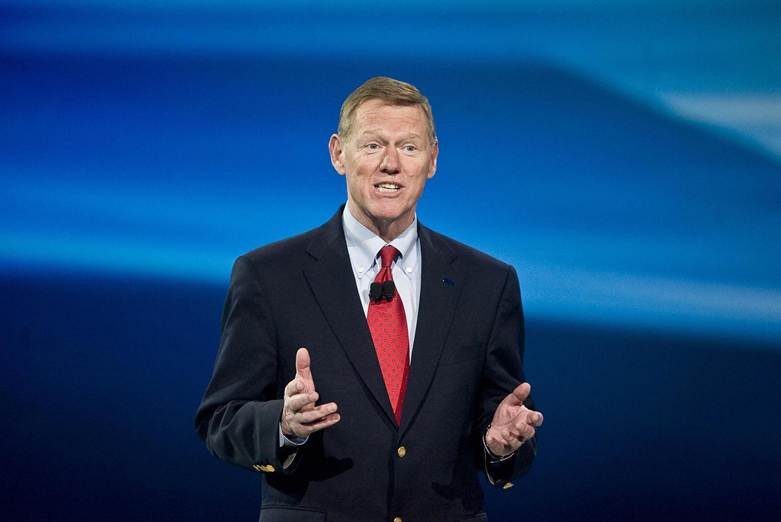
Mulally summed up the posture behind it simply: “Move from ‘I’ to ‘we’ and from ‘me’ to service.”
That is humility doing real business work. It isn’t self-deprecation or stepping back. It’s a leader secure enough to reward bad news, because bad news surfaced early is the only kind you can fix.
Why Humble Leaders Still Get Passed Over
If humility pays off, why do organizations keep missing it?
Hogan Assessments names the problem directly: organizations often overlook humble employees for leadership roles in favor of charismatic ones. Charismatic people are charming and inspiring, but many turn out to be narcissistic, arrogant, or potentially exploitative. Humble leaders, by contrast, empower followers and promote team learning.
The issue is visibility. Charismatic leaders stand out easily, and their likability can mask more important performance characteristics, while humble and often more effective leaders may fly under the radar and be passed over for hiring or promotion.
Personality science helps explain the blind spot. The HEXACO model (Ashton & Lee, 2007) added a sixth dimension to the familiar Big Five, Honesty-Humility, which captures sincerity, fairness, avoiding greed, and modesty. How a person handles power and advantage turns out to be a core trait in its own right, and one that a charming interview rarely reveals.
As the old phrase goes: “Pride goeth before destruction, and an haughty spirit before a fall” (Proverbs 16:18, KJV). A proud leader stops listening too quickly. They believe that they know all the answers. It is not hard to see how this leader will get blindsided.
What to Do With This
Stop performing the counterfeits! Stop shrinking, stop performing, and aim for an accurate view of yourself, your gifts included.
For organizations, the fix isn’t to distrust every confident candidate. It’s to stop mistaking confidence for the whole picture. Companies should build selection and development programs that overcome personal biases and focus on objective indicators of success. In practice, that means structured interviews, validated assessments, and input from people who have actually worked for the candidate.
Charisma may get a leader noticed. Humility gets a team further.
Contact Mountain North Coaching and Consulting to learn more about how you can improve your talent management practices to strengthen your company.
References
Aquinas, T. Summa Theologiae, II-II, q. 129 (magnanimity) and q. 161 (humility).
Ashton, M. C., & Lee, K. (2007). Empirical, theoretical, and practical advantages of the HEXACO model of personality structure. Personality and Social Psychology Review, 11(2), 150–166.
Hogan Assessments. Humility (research overview); The Importance of Humility in Leadership (interview with Dr. Robert Hogan); Leading with Humility: Global Perspectives and Personality Insights (webinar).
Humble leadership and its outcomes: A meta-analysis. (2022). Frontiers in Psychology, 13, 980322. [authors to add]
Mulally, A., quoted in “Alan Mulally on the power of transparency.” (2025). Chief Executive. https://chiefexecutive.net/alan-mulally-on-the-power-of-transparency/
Ou, A. Y., Waldman, D. A., & Peterson, S. J. (2018). Do humble CEOs matter? An examination of CEO humility and firm outcomes. Journal of Management, 44(3), 1147–1173.
Owens, B. P., Johnson, M. D., & Mitchell, T. R. (2013). Expressed humility in organizations: Implications for performance, teams, and leadership. Organization Science, 24(5), 1517–1538.
Petrenko, O. V., et al. (2019). The case for humble expectations: CEO humility and market performance. Strategic Management Journal. [confirm authors and pages]
Wu, Z., Chen, L., & Zhang, K. (2025). From humble leadership to follower performance: A meta-analysis of relational and cognitive mechanisms. Journal of Leadership & Organizational Studies. [confirm journal]
Leader expressed humility: A meta-analysis and an agenda for future research (2025). Personality and Individual Differences. [confirm authors and year]